Pink Floyd and the Mytic Dark Side of the Moon Album
Read time:

The Eternal Echo: Celebrating the Dark Side of the Moon 50th Anniversary
In 1973, four musicians entered Abbey Road Studios to finalize a project that would alter the trajectory of modern music forever. While they were already established figures in the London underground scene, nothing could have prepared the world for the sonic monolith that was Dark Side of the Moon. As we celebrate the Dark Side of the Moon 50th anniversary, the album remains a staggering achievement in artistic vision, commercial longevity, and technical innovation. It is more than just a collection of songs; it is a seamless, 43-minute meditation on the human condition, exploring themes of time, greed, conflict, and mental fragility.
Pink Floyd did not merely record an album; they constructed an immersive universe. This landmark release spent an unprecedented 900-plus weeks on the Billboard 200, a feat that speaks to the timeless nature of its composition. To understand why this record continues to resonate with both aging audiophiles and digitized Gen Z listeners, one must look beneath the surface of its iconic prism cover and examine the meticulous craft that defined Pink Floyd’s progressive rock influence.
From Psychedelia to Progressive Mastery: A Sonic Evolution
The origins of Pink Floyd were steeped in the whimsical, lysergic-drenched psychedelia of Syd Barrett. However, following Barrett’s departure, the band—comprising Roger Waters, David Gilmour, Richard Wright, and Nick Mason—began a transition toward a more structured, yet equally experimental, sound. The Pink Floyd progressive rock influence became evident as they moved away from short, erratic tracks toward long-form compositions that prioritized atmosphere and thematic continuity.
By 1973, the band had mastered the art of “the suite.” Dark Side of the Moon was unique because it functioned as a single, cohesive piece of music. The transitions between tracks like “Speak to Me” and “Breathe” are so seamless that they blur the line between individual songs and a continuous narrative. This structural audacity paved the way for the progressive rock movement of the 1970s, encouraging other artists to view the long-play record (LP) as a canvas for high-concept storytelling rather than just a delivery vehicle for radio singles.
This evolution was underpinned by the band’s relentless pursuit of artistic integrity. They weren’t interested in the pop charts; they were interested in the meaning of Dark Side of the Moon lyrics and how those words could be mirrored by sonic textures. Roger Waters, who assumed the role of the band’s primary lyricist during this period, moved away from space-age metaphors to tackle the visceral anxieties of everyday life: the pressures of the clock, the corrupting nature of money, and the fine line between sanity and madness.
Innovation in the Booth: Pink Floyd Studio Recording Techniques
Perhaps the most significant factor in the album’s enduring legacy is its production quality. Collaborating with engineer Alan Parsons, the band pushed the boundaries of what was possible in a recording studio. The Pink Floyd studio recording techniques utilized during the 1972-1973 sessions were years ahead of their time, involving 16-track analog tape recorders and primitive yet effective synthesizers like the EMS VCS 3 and Synthi AKS.
- The Use of Loops: Long before digital sampling, the band used physical tape loops to create the rhythmic backbone of tracks like “Money.” They meticulously cut and spliced recordings of coins, tearing paper, and cash registers to create a 7/4 time signature loop that functioned as a percussive element.
- The Studio as an Instrument: The band used the studio itself to create “dreamscapes.” By using panning, reverb, and delays, they created a 3D audio experience that was particularly transformative for listeners using headphones.
- Found Sounds: One of the most haunting aspects of the album is the series of interviews conducted with roadies, doormen, and even Paul McCartney (though his answers weren’t used). These spoken-word snippets, such as “There is no dark side of the moon really… as a matter of fact, it’s all dark,” add a layer of psychological depth and realism to the record.
The result was an album that sounded pristine even decades later. When listening to the 50th-anniversary remasters, the clarity of the instrumentation remains a benchmark for high-fidelity audio. The synthesis of organic instruments and synthetic textures created a soundscape that felt both futuristic and deeply grounded in blues-based rock.
The Melodic Soul: David Gilmour and Richard Wright
While Roger Waters provided the conceptual framework, the emotional weight of the album rested heavily on the shoulders of David Gilmour and Richard Wright. David Gilmour’s guitar style and gear are essential components of the Floyd “sound.” Known for his “less is more” philosophy, Gilmour focused on phrasing, vibrato, and sustain rather than speed. His solo on “Time” is often cited as one of the greatest in rock history, utilizing his famous “Black Strat,” a Dallas Arbiter Fuzz Face, and a Binson Echorec to create a tone that was both searing and ethereal.
Complementing Gilmour’s guitar was the atmospheric keyboard work of Richard Wright. Wright’s use of the Hammond organ, Farfisa, and various synthesizers provided the “glue” that held the compositions together. His ability to layer textures—such as the shimmering electric piano on “Us and Them”—created an immersive environment that allowed the listener to drift within the music. This interplay between the melodic guitar and the atmospheric keys is what gave Pink Floyd their “dreamlike” quality, setting them apart from the more aggressive hard rock bands of the era.
The Pink Floyd progressive rock influence is perhaps most visible in this dynamic contrast. The band could move from a whisper to a roar in a matter of seconds. The transition from the quiet, rhythmic pulsing of “On the Run” into the explosive, jarring alarm clocks of “Time” is a masterclass in tension and release. It is this mastery of dynamics that keeps the listener engaged across the entire duration of the album.
Lyrical Resonance and Cultural Impact
To truly grasp the meaning of Dark Side of the Moon lyrics, one must look at the climate of the early 1970s. The optimism of the 1960s had faded, replaced by political instability and social fatigue. Waters’ lyrics tapped into a universal sense of alienation. In “Time,” he writes about the terrifying realization that life is slipping away (“And then one day you find ten years have got behind you / No one told you when to run, you missed the starting gun”). These lines are as relevant to a 20-year-old today as they were to a 20-year-old in 1973.
The album’s climax, “Brain Damage” and “Eclipse,” serves as a haunting tribute to the band’s founder, Syd Barrett, but it also reflects a broader concern for the fragility of the human mind. By addressing mental health and societal pressure, Pink Floyd humanized progressive rock, moving it away from the purely fantastical “wizards and capes” tropes of other contemporary bands and grounding it in the shared human experience.
This grounding is why the Dark Side of the Moon 50th anniversary is being celebrated globally. The album has transitioned from a piece of counter-culture media to a permanent fixture of heritage, taught in schools and analyzed in university musicology departments. It represents a rare moment where high-concept art met massive commercial success without compromising a single ounce of its vision.
The Legacy: Beyond the Prism
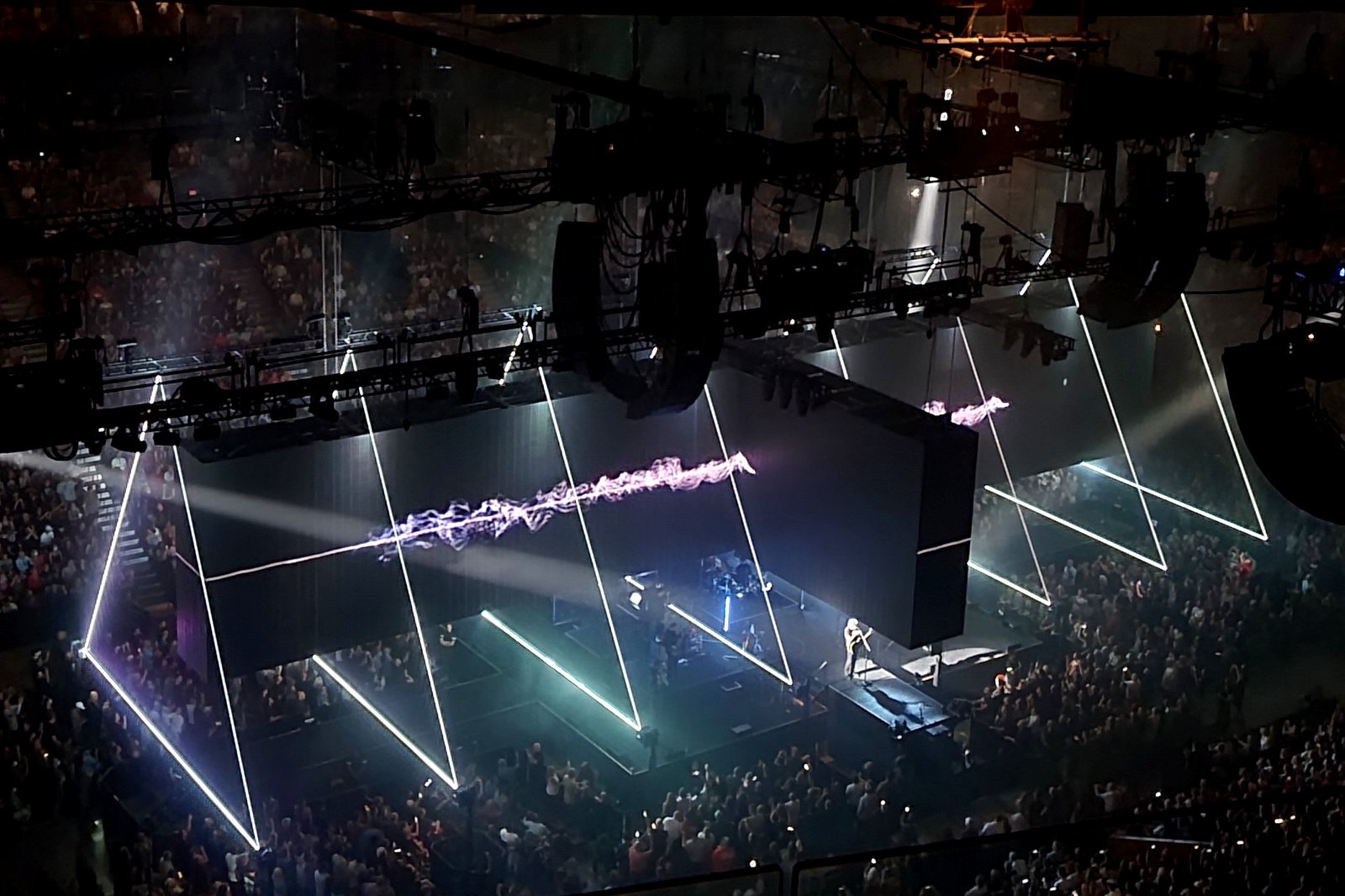
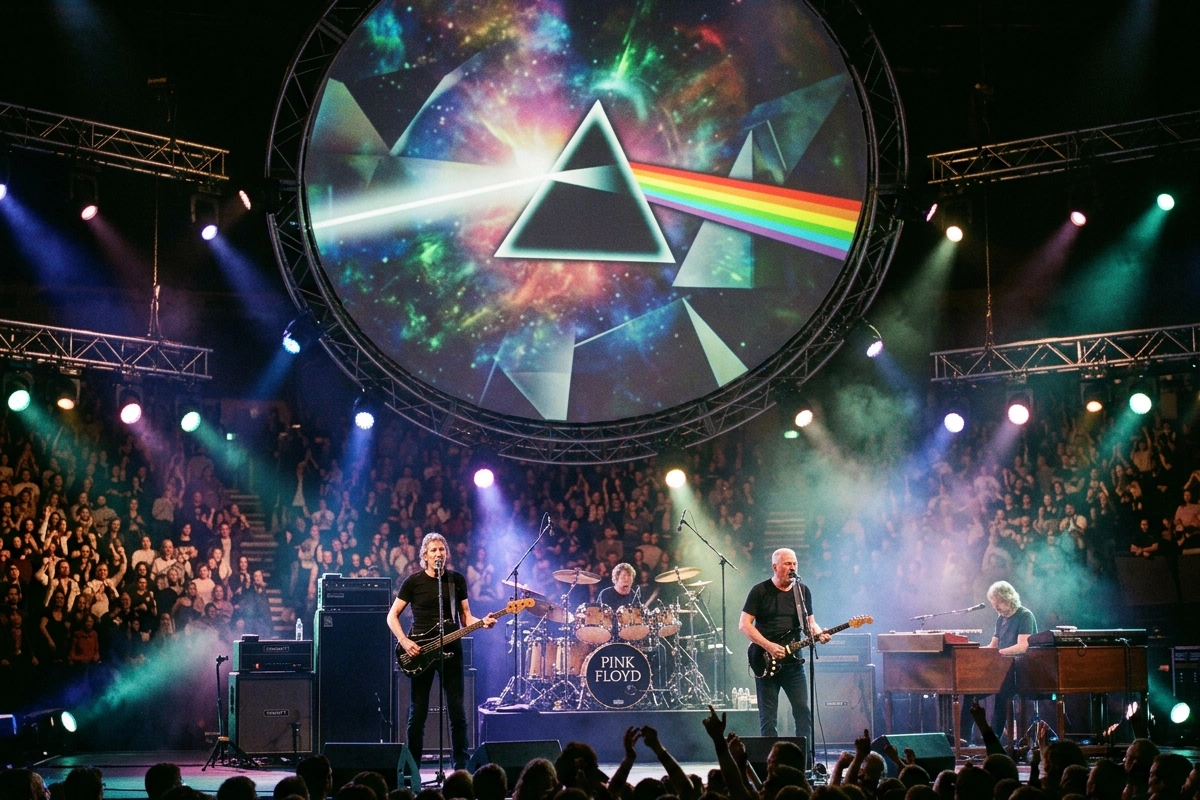
The enduring influence of Pink Floyd can be seen in everything from the ambient movements of the 1990s to the modern psych-rock revival. Their immersive live performances, which featured circular projection screens, elaborate light shows, and quadraphonic sound, set the standard for the modern stadium concert. They understood that music was a sensory experience that should be felt as much as heard.
As we look back on 50 years of Dark Side of the Moon, it is clear that its brilliance lies in its balance. It is technical yet emotional; it is complex yet accessible; it is specific to its time yet utterly timeless. Whether you are revisiting the record on a vintage turntable or discovering it for the first time via a high-resolution stream, the journey from the first heartbeat of “Speak to Me” to the final fading pulse of “Eclipse” remains one of the most profound experiences in the history of recorded sound.
Are you ready to dive back into the shadows? Whether it’s through exploring the nuances of David Gilmour’s guitar style and gear or dissecting the meaning of Dark Side of the Moon lyrics, there is always something new to find within this masterpiece. Dust off your vinyl, put on your best headphones, and experience the album that changed everything. The dark side is waiting.