Global Warming’s Deadly Heatwaves: How They’re Threatening Lives and Proven Ways to Fight Back
Read time:

The Burning Truth: Is Global Warming Becoming Our Climate’s Final Exam?
If you have ever stepped out of an air-conditioned office and felt the air hit you like a soggy, heated wool blanket, you have met the future. It’s a bit rude, isn’t it? For decades, we spoke of global warming effects on human health in the future tense—as if it were a bill we could simply choose not to pay. But the invoice has arrived, and it is marked “Urgent.” Between 2030 and 2050, the World Health Organization predicts an additional 250,000 deaths per year due to climate-related causes. This isn’t just about melting glaciers or an occasional sweaty afternoon; it is about our biological limits being tested by a world we’ve accidentally turned into a convection oven.
Scientists often refer to climate change as a “threat multiplier.” It’s a clever, albeit terrifying, term. It means that if you already have a problem—say, a weak respiratory system, a fragile power grid, or a neighborhood prone to flooding—global warming grabs that problem and turns the volume up to eleven. From the way our hearts pump in a heatwave to the microscopic movements of disease-carrying mosquitoes, the landscape of human survival is shifting. However, before you decide to pack it all in and move to a subterranean bunker, there is a silver lining: humans are remarkably good at cooling off, and even better at innovating when our backs are against the wall.
The Human Radiator: Our Evolutionary Edge and Its Upper Limit
Let’s take a moment to appreciate the sheer genius of the human body. Unlike most of our furry friends in the animal kingdom, we are essentially walking, talking radiators. While a dog has to pant frantically to stay cool and a cat simply judges you from the shade, humans have 2 to 5 million sweat glands distributed over nearly every square inch of our skin. This whole-body cooling mechanism allows us to perform sustained physical activity in temperatures that would leave other mammals in a heap. We are the marathon runners of the natural world, powered by the incredible physics of evaporation.
When sweat moves from a liquid to a vapor on your skin, it steals heat from your body. It’s elegant, it’s efficient, and it’s served us well for millennia. However, even the most efficient radiator has a breaking point. This brings us to a concept every person should understand: the wet-bulb temperature human survival limit. A wet-bulb temperature is essentially the lowest temperature that can be reached by evaporative cooling. When the air is saturated with moisture (high humidity), your sweat can’t evaporate. It just sits there, making you look like you’ve just finished a very intense yoga session, but providing zero cooling.
The 35°C Threshold: When Biology Hits a Wall
The magic—or rather, tragic—number is 35°C (95°F) at 100% humidity. At this point, the air is so full of water that it can’t take any more from your skin. Your internal core temperature begins to rise relentlessly. Even if you are fit, hydrated, and sitting perfectly still in the shade, your body will eventually succumb to lethal hyperthermia. While we are better equipped than animals to handle heat, we are not invincible. Animals lack the ability to flick a switch on an air conditioner or choose a linen shirt over a fur coat, making them the first victims of this thermal ceiling, but humans are not far behind. As extreme heat deaths per year continue to climb, understanding these physiological limits is no longer academic—it’s a matter of survival.
A Multi-Front War: How the Heat Multiplies Every Risk
If global warming were just about being uncomfortably warm, we might manage. But the climate change threat multiplier health risks extend far beyond the thermometer. It is a domino effect where one fallen tile knocks over the next, leading to a cascade of crises that impact our food, our water, and even our minds.
1. The Return of the Vector: Disease Spread
Mosquitoes and ticks are not just summer nuisances; they are tiny, buzzing delivery systems for some of the world’s nastiest illnesses. As the planet warms, the geographic range of these “vectors” expands. Mosquitoes that carry Malaria, Dengue Fever, and Zika are moving into higher altitudes and further north and south from the equator. Places that were once too chilly for these tropical guests are now seeing local transmissions. Furthermore, longer warm seasons mean these insects have more time to breed, feed, and infect. We aren’t just getting warmer; we are becoming more hospitable to the very things that make us sick.
2. The Empty Plate: Food and Water Insecurity
Agriculture is a delicate dance between soil, sun, and rain. Global warming steps on the toes of all three. Extreme heat can wither crops in the field before they can be harvested, while shifts in rainfall patterns create “flash droughts” or devastating floods. When crops fail, prices spike. For a family in a developed nation, this might mean a more expensive grocery bill; for those in developing regions, it means malnutrition. Malnutrition, in turn, weakens the immune system, making populations more susceptible to the diseases we just discussed. It is a vicious cycle that links the health of our soil directly to the health of our children.
3. The Smoke in the Room: Air Pollution and Wildfires
We’ve all seen the orange skies on the evening news. Wildfires are becoming larger and more frequent due to desiccated forests and rising temperatures. This isn’t just a local problem for those living near the woods. The particulate matter (PM2.5) from these fires travels thousands of miles, settling deep inside the lungs of people in distant cities. This exacerbates asthma, causes heart attacks, and increases the risk of stroke. Even without the fires, warmer air traps smog and ozone closer to the ground, turning our cities into “domes” of stagnant, dirty air that is increasingly difficult to breathe.
The Invisible Wound: Mental Health in a Warming World
We often focus on the physical toll—the heatstroke, the infection, the respiratory distress. But we must also talk about what this does to our psyche. Psychologists are seeing a rise in “eco-anxiety,” particularly among younger generations who feel the weight of an uncertain future. Beyond the anxiety, the physical reality of extreme heat is linked to increased rates of aggression, domestic violence, and suicide. High temperatures disturb sleep, and a chronically sleep-deprived population is a stressed, irritable, and vulnerable one. When we lose our homes to a flood or our livelihoods to a drought, the trauma leaves scars that no bandage can cover.
It is also worth noting the socio-economic dimension. Richer individuals can afford to retreat into climate-controlled oases, while the “working poor”—construction workers, farm laborers, delivery drivers—are forced to face the elements. This disparity creates a sense of “climate injustice” that breeds social unrest and deepens the divide in our communities. Protecting human health means protecting the mental and emotional well-being of every citizen, not just those with the best HVAC systems.
Innovative Solutions: From Ancient Engineering to Modern Tech
Now, let’s breathe. (Ideally, air that has been filtered). While the challenges are immense, human ingenuity is already crafting solutions. We are moving from a reactive “emergency” mindset to a proactive “adaptation” strategy. The goal is simple: keep people cool, keep the planet from heating further, and ensure our infrastructure can handle the new normal.
Cooling the Concrete Jungle: The Paris Example
Cities are notorious “urban heat islands.” Asphalt and concrete soak up the sun’s rays all day and radiate them back at night, preventing the city from ever truly cooling down. But Paris is showing the world a different way. The city operates Europe’s largest urban cooling systems. Instead of thousands of individual, energy-hungry AC units blowing hot air back onto the streets, Paris uses a centralized network. The system draws water from the River Seine, uses it to cool a closed-loop network to roughly 3°C–5°C, and then returns the slightly warmed water to the river. This chilled water is piped through over 100 kilometers of underground lines to more than 800 locations, including the Louvre and several hospitals. It is quieter, more efficient, and drastically reduces the carbon footprint of keeping a metropolis comfortable.
Heat Action Plans and Medical Preparedness
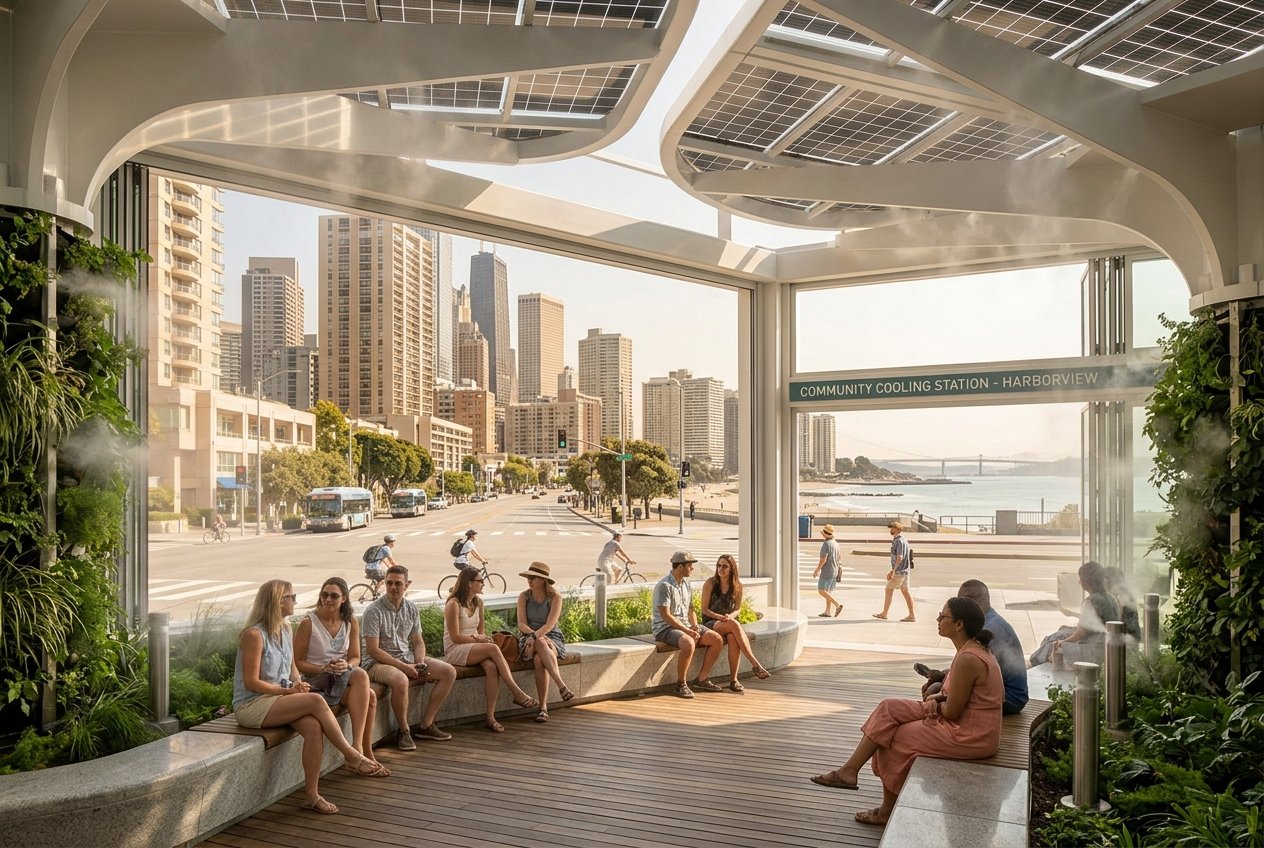
Adaptation also means changing how we govern. “Heat Action Plans” are becoming standard in major cities. These plans involve early warning systems that alert the public before a heatwave hits, the establishment of “cooling centers” (public spaces with AC for those who don’t have it at home), and proactive outreach to the elderly and vulnerable. In the medical field, doctors are being trained to recognize the subtle signs of heat-related illness before they become fatal. High-risk patients are being monitored more closely during the summer months, treating heat as a medical vital sign as important as blood pressure.
Mitigation: Stopping the Fever at the Source
Adaptation is like putting an ice pack on a patient with a fever. It helps, but if you don’t treat the underlying infection, the fever will return. That “infection” is our reliance on fossil fuels. To prevent extreme heat deaths per year from skyrocketing past the quarter-million mark, we must phase out the CO2-emitting energy sources that got us here.
The Real-World Cost of Oil Dependence
Recent history has shown us that our dependence on fossil fuels isn’t just an environmental risk; it’s a geopolitical and economic one. Consider the disruptions caused by conflict. For instance, the tensions involving major oil-producing regions—often exacerbated by international policy shifts, such as those seen in the mid-2020s involving Iran, the U.S., and Israel—led to unjustified spikes in energy prices that crippled household budgets worldwide. This volatility is a symptom of a fragile, outdated system. We are clinging to a 19th-century energy source to power a 21st-century world.
The Green Path Forward
The transition to green energy is no longer a “nice to have” pipe dream; it is an economic and survival necessity. Replacing coal and gas with wind, solar, and geothermal power isn’t just about “saving the polar bears”—it’s about saving ourselves.
- Sustainable Transportation: Moving toward electric vehicles (EVs) and robust public transit systems reduces the localized heat and pollution in our cities.
- Dietary Changes: Reducing our reliance on industrial-scale livestock farming—a major source of methane—can have an immediate cooling effect on the atmosphere.
- Reforestation: Trees are nature’s air conditioners. Reforesting urban and rural areas provides shade, absorbs CO2, and helps regulate local water cycles.
- Material Innovation: From bioplastics to greener electronic components, we have the technology to create the products we love without the carbon hangover.
The Role of Political Will and Personal Choice
We often feel small in the face of a global crisis. What can one person do against a warming ocean? The truth is that systems change when people demand it. The technologies mentioned above—wind turbines, solar panels, sophisticated urban cooling systems—already exist. What is often missing is the political will to implement them at scale. We need to make the “right” decisions at the ballot box and the “right” choices in our daily lives. This means supporting leaders who prioritize climate resilience and making personal switches where we can: better home insulation, reduced plastic use, and supporting local, sustainable businesses.
This is not about returning to the Stone Age. It is about moving forward into a “Golden Age” of efficiency. Imagine a city where the air is clean, the buildings are naturally cool, and the energy is abundant and carbon-free. That isn’t a sci-fi fantasy; it is a technically achievable reality that is currently being built in pieces across the globe. We just need to put the puzzle together faster.
FAQs: Understanding Global Warming and Your Health
How many extreme heat deaths per year are we currently seeing?
While numbers fluctuate, recent studies suggest that extreme heat already contributes to over 300,000 deaths annually worldwide, a number expected to rise sharply as the climate change threat multiplier health effects intensify. Many of these deaths are mislabeled as heart attacks or organ failure, masking the true impact of the heat.
Is the “wet-bulb” temperature really that dangerous?
Yes. The wet-bulb temperature human survival limit is a hard physiological ceiling. When the wet-bulb temperature hits 35°C, the body can no longer shed heat through sweating. Without intervention like air conditioning or submergence in cool water, death becomes a statistical certainty within hours for most people.
Can we really replace all fossil fuels with green energy?
The transition is a massive undertaking, but yes. With a combination of solar, wind, nuclear, and battery storage technology, we can meet the world’s energy needs. The primary obstacles are currently infrastructure and political inertia, not technological capability.
What can I do personally to stay safe during a heatwave?
Stay hydrated, wear loose-fitting reflective clothing, and avoid strenuous activity during the peak sun hours (10 AM to 4 PM). Most importantly, check on older neighbors or those with pre-existing conditions, as they are often the first to suffer when the temperatures climb.
Are urban cooling systems expensive?
The initial investment is significant, but they are far more cost-effective in the long run than thousands of individual air conditioning units. They use less electricity, require less maintenance, and help lower the overall temperature of the city, which reduces the “heat island” effect for everyone.
Conclusion: The Choice Before Us
The story of global warming is often told as a tragedy, but it can also be a story of triumph. We are the first generation to truly understand our impact on the planet’s thermostat, and we are the last generation that can do something about it. By acknowledging the global warming effects on human health for what they are—a present-day crisis—we can move from fear into action. We have the biological advantage of being superior “coolers,” and we have the intellectual advantage of being world-class problem solvers.
As we look toward the future, let us choose the path of resilience. Let us build cities like Paris that drink from their rivers to stay cool. Let us protect the vulnerable, transition our power grids, and treat every degree of warming we prevent as a life saved. The planet is beautiful, our physiology is a miracle of evolution, and our capacity for change is limitless. It’s time to turn down the heat and get to work. Will you stand by, or will you be part of the solution? Support local green initiatives, advocate for sustainable infrastructure, and let’s ensure that the “final exam” for our species is one we pass with flying colors.