
Why the OM-1 Camera Kit Might Be the Smartest Investment You’ll Make This Year
Read time:

For several years now, a quiet revolution happening in the world of professional photography, and it’s happening not in expensive full-frame sensor labs, but in the clever engineering of a camera system that fits in a modest shoulder bag. The OM System OM-1 paired with the Zuiko 40-150mm F4 PRO lens represents something photography veterans have been waiting for: a genuinely professional setup that delivers exceptional results without requiring a second mortgage.
For photographers who have watched camera prices climb into the stratosphere while their retirement accounts do the opposite, this combination offers a compelling argument. You’re not sacrificing quality—you’re gaining portability. You’re not compromising professionalism—you’re maximizing value. And perhaps most importantly, you’re free to focus on what actually matters: the light, the moment, and the photograph.
Why the OM-1 Changes the Budget Camera Conversation
The conversation around professional photography gear has long been dominated by a simple assumption: bigger sensors equal better photos. Full-frame cameras have been positioned as the only serious choice for working photographers, with prices to match. But the OM-1 camera review literature tells a more nuanced story—one where computational photography closes the gap in ways that would have seemed like science fiction a decade ago.
The Micro Four Thirds system operates on a clever mathematical advantage. Because the sensor is smaller than full-frame, your lenses effectively double their focal length. That 40-150mm lens gives you the equivalent reach of an 80-300mm full-frame telephoto—without the weight, without the price tag, and without the muscle fatigue after a long day in the field.
This isn’t a compromise. It’s a design philosophy. The Olympus OM-1 vs full frame camera debate isn’t really about sensor size at all—it’s about what you’re willing to carry, how far you’re willing to hike, and whether being present in the moment matters more than technically perfect equipment that’s too heavy to use.
The OM-1’s Core Strengths
The OM-1 packs a 20-megapixel stacked sensor into a weather-sealed body that feels substantial without being burdensome. Here’s what makes this camera genuinely professional:
- Stacked BSI Sensor: The stacked architecture means faster readout, reduced rolling shutter, and snappy performance when tracking action.
- In-Body Image Stabilization (IBIS): Up to 7 stops of shake compensation—that’s the difference between a razor-sharp wildlife shot and a blurry disappointment.
- Advanced Subject Tracking: The AI-powered autofocus recognizes birds, animals, vehicles, and humans, keeping your subject locked on even through branch clutter and unpredictable movement.
- Computational Photography Suite: High Res Shot, Focus Stacking, Live ND, and Live Composite—all built in, no software or filters required.
- Weather Sealing: This camera laughs at rain, dust, and the occasional splash from a waterfall. It’s built for the field.
The weight? Just 599 grams. That’s less than many full-frame camera bodies alone, before you even add a lens. This matters more than you might think until you’ve spent eight hours hiking with a full-frame telephoto setup on your shoulder.
The 40-150mm F4 PRO: The Smart Telephoto Choice
If the OM-1 is the brain of this operation, the 40-150mm F4 Pro lens review reveals the muscle. This lens represents a fascinating design philosophy—sacrificing one stop of aperture (compared to the F2.8 version) in exchange for dramatically reduced weight and size.
The numbers tell a compelling story. The F4 PRO weighs approximately 383 grams. The F2.8 PRO? Roughly 880 grams. That’s a difference of nearly a full pound—a pound you’ll appreciate when you’re hiking to a sunrise location or tracking wildlife for hours. The F4 PRO achieves this through a clever retractable zoom mechanism that shrinks the lens when not in use, making it the world’s smallest professional zoom telephoto.
Why F4 Is the Smart Aperture Choice
Here’s something experienced photographers understand: F4 is often all you need. The constant aperture throughout the zoom range provides consistent exposure and depth of field control. For wildlife, sports, and travel photography, you’re frequently shooting at F4-F5.6 anyway to ensure sufficient depth of field on your subject.
The lens delivers sharp, professional results across its entire zoom range. The optical quality rivals the F2.8 version—it just does so in a more travel-friendly package. For portrait work, the telephoto compression creates that beautiful background separation that makes subjects pop, even without the shallow depth of field that only comes with larger sensors.
Building a Complete Kit
To cover all your bases, you’ll want one additional lens to complement the 40-150mm. Consider these options based on your primary focus:
- 12-40mm F4 PRO: The perfect wide-to-mid zoom for landscapes, architecture, and travel. Covers wide-angle needs without overlap.
- 60mm F2.8 Macro: If macro or close-up work interests you, this dedicated macro lens with focus stacking capability opens new creative doors.
- 12-45mm F4 PRO: A slightly wider option that’s also remarkably compact, ideal for everyday carry.
With one of these additions, you have a complete professional system that covers everything from ultra-wide landscapes to wildlife at significant distance—all in a bag that won’t require a chiropractic consultation afterward.
Note: If you’re on a tight budget, you can buy second-hand lenses, which are often as good as new.
Computational Photography: The Secret Weapon
This is where the OM-1 genuinely separates itself from the full-frame competition. The computational features built into this camera address limitations that have plagued photographers for decades—and they do it automatically, in-camera, without requiring post-processing expertise.
High Res Shot: More Detail Than 20 Megapixels Should Allow
Twenty megapixels sounds modest in an era of 50-megapixel full-frame sensors. But the OM-1’s High Res Shot mode changes the calculation entirely.
Tripod Mode: For static subjects—landscapes, architecture, still life—tripod High Res Shot captures multiple frames and merges them into approximately 80-megapixel files. The detail retrieval is remarkable, revealing texture and nuance that simply doesn’t exist in the raw 20-megapixel capture.
Handheld Mode: Even without a tripod, the camera’s computational algorithms compensate for minor movement, producing approximately 50-megapixel files. This is revolutionary for travel photographers who want high-resolution landscapes without lugging a tripod.
Use High Res Shot when you want maximum detail for landscapes, architecture, or carefully composed studio work. Skip it when there’s significant motion in the scene or when you need rapid sequential shooting.
Focus Stacking: Macro and Landscape Game-Changer
OM System pioneered focus stacking in consumer cameras, and the OM-1’s implementation remains best-in-class. This feature captures a sequence of images at different focus distances, then merges them in-camera to produce a single, fully-focused JPEG.
For macro photographers shooting insects, flowers, or intricate product photography, focus stacking eliminates the frustration of shallow depth of field. For landscape photographers, it allows front-to-back sharpness that would otherwise require tiny apertures and diffraction-limiting settings.
The key to avoiding artifacts: use a lower focus differential (settings of 2-4 work well), start your focus slightly into the scene rather than at the extreme edge, and use a narrower aperture like F5.6-F11 for better overlap between frames. This produces smooth, professional results without the “creamy blur” that plagues poorly-executed stacks.
Live ND: Long Exposures Without the Filters
One of the most practical computational features, Live ND simulates physical neutral density filters by compositing multiple exposures internally. The original OM-1 offers up to 6 stops (ND64), while the OM-1 Mark II extends this to 7 stops (ND128).
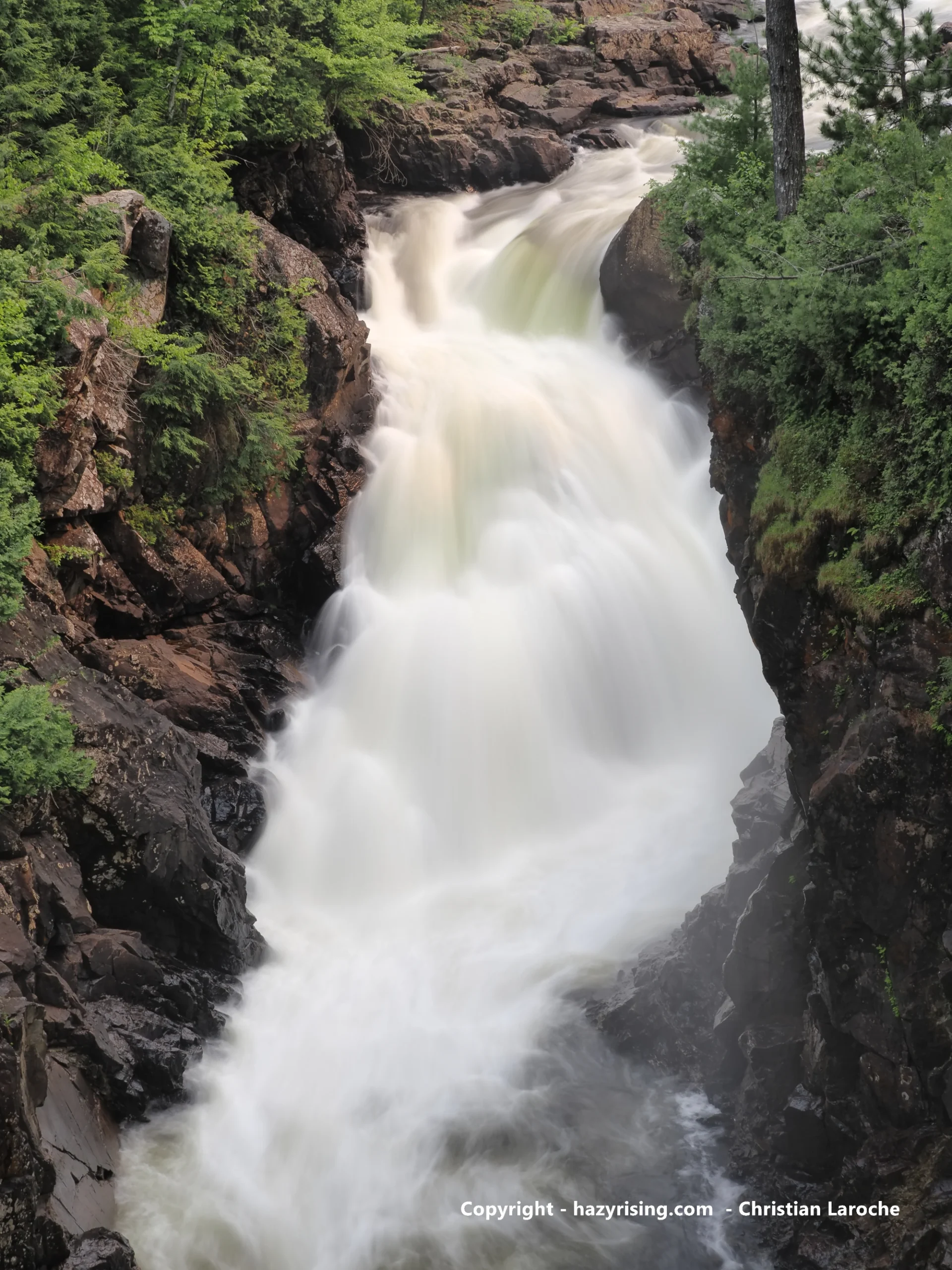
Imagine smoothing moving water to create that silky, dreamlike effect in broad daylight—without carrying a set of glass ND filters, without the light loss that comes with stacking filters, and with the ability to preview the effect in real-time on the LCD before you shoot.
The real-world application is beautifully simple: start with a base exposure that protects highlights, let the camera stack incoming light over time, and stop when the effect looks right. The OM-1 handles everything automatically.
Live Composite: Light Painting Without the Guesswork
For creative photography involving light trails, fireworks, stars, or any scene where you want to build light over time while preserving static elements, Live Composite is remarkable. The camera builds the final image from repeated exposures, so you can preserve bright highlights while adding only the changing parts of the scene.
This takes the guesswork out of light painting and long-exposure photography. What you see on the screen is what you’ll get in the final image.
Practical Shooting: Making the Gear Work for You
All the computational power in the world means nothing if you don’t know how to use it. Here’s the practical approach that experienced photographers take into the field:
The Priority Workflow
Reputable photographers approach every shoot with a consistent decision hierarchy:
- Angle First: Move your feet before changing settings. Your angle determines background, shape, and subject separation more than any camera setting. For portraits, eye level often works best. For landscapes, a lower or more deliberate angle creates stronger composition.
- Aperture Second: Choose your depth of field. Wide apertures (f/2.8-f/4) isolate subjects from busy backgrounds. Narrow apertures (f/8-f/11) keep everything sharp.
- Shutter Third: Set for your subject. Fast shutter speeds (1/500+) freeze action for wildlife and sports. Slower speeds introduce deliberate motion blur for creative effect.
- ISO Last: Raise ISO only as needed to achieve the exposure you want. Keep it as low as practical for cleanest files.
For landscapes or static subjects, stop down for more depth of field, then consider tripod High Res Shot if the scene is still. For macro-like close work, focus stacking often produces better results than simply stopping down too far.
Color Science and Dynamic Range
The OM-1 produces files with excellent color rendition and usable dynamic range—especially when you understand how to expose properly. The computational features also extend usable dynamic range in ways that rival full-frame performance.
Experienced photographers often underexpose slightly in bright conditions rather than blow out important highlights, then lift shadows in post-processing if needed. The OM-1’s RAW files handle shadow recovery gracefully, and High Res Shot can actually improve shadow performance by capturing more tonal information.
The key insight: good light, proper technique, and the right shutter speed for your subject matter usually matter more than chasing special camera settings. The OM-1’s default color profile produces pleasing skin tones and natural outdoor colors that require minimal post-processing adjustment.
Is This the Right Kit for You?
The OM-1 camera review and lens combination makes the most sense for photographers who:
- Want professional results without professional-level investment
- Prioritize portability and travel capability over sensor size prestige
- Shoot wildlife, sports, travel, or landscapes where reach matters
- Appreciate computational features that simplify complex techniques
- Want a complete system that fits in a modest bag
If you’re weighing Micro Four Thirds wildlife photography against full-frame alternatives, the honest answer is this: the OM-1 delivers professional results in a package that you’ll actually want to carry. Full-frame cameras with equivalent telephoto reach often cost twice as much and weigh significantly more.
Frequently Asked Questions
Is the OM-1 good enough for professional work?
Absolutely. The 20-megapixel sensor combined with computational photography features produces files that meet professional standards for web, print, and commercial use. Major publications and working photographers use OM System cameras for professional assignments regularly.
How does the OM-1 compare to full-frame for low-light photography?
While full-frame sensors have a theoretical advantage in low light, the OM-1’s excellent IBIS (7 stops) and wide aperture lens options mean you can shoot at slower shutter speeds handheld—effectively capturing more light. The modern stacked sensor also performs remarkably well at higher ISOs.
Is the 40-150mm F4 PRO sharp enough for professional work?
The 40-150mm F4 PRO delivers optical performance that matches or exceeds many full-frame telephoto zooms in its class. Professional photographers use this lens for paid assignments with complete confidence.
Do I need to buy filters for the OM-1?
Not necessarily. Live ND handles long-exposure effects without glass filters. For polarizer needs, a thin polarizer still fits, but many photographers find the camera’s computational features reduce filter requirements significantly.
What’s the real-world battery life like?
The OM-1 uses a reliable battery that typically yields 300-400 shots per charge. For extended field sessions, carrying a spare battery is recommended—though this is true of virtually any mirrorless camera.
The Secret Nobody Tells You
It is never the gear alone. The gear is the silent partner that removes every excuse.
The OM-1 and 40-150mm F4 PRO remove weight, remove technical barriers, remove the need to compromise. They let the photographer stay in the moment instead of managing equipment. When you’re not struggling with a heavy bag or worrying about missed shots due to inadequate reach, something shifts. You become present. You become responsive to the light, the mood, the fleeting instant that makes a photograph meaningful.
The world’s greatest photographers speak of this in quiet tones. The decisive instant is not about luck. It is about being so free of distraction that intuition and light become one. The OM-1’s computational wizardry—focus stacking, Live ND, Live Composite, High Res—doesn’t create the soul of the image. It simply clears the path so the soul can arrive unhindered.
That is what makes an OM-1 photograph with the 40-150mm F4 PRO different from all the others. It doesn’t just capture the moment. It lets the moment reach back.
Ready to experience what a lighter, smarter camera system can do for your photography? The OM-1 with 40-150mm F4 PRO represents one of the best values in professional photography today. Explore the system, feel the difference that half a kilogram makes, and discover what becomes possible when your gear disappears and your vision takes center stage.