
The Invisible Dinner Guest: Why We Must Purge Plastics from Our Global Food Chain Now
Read time:

The Invisible Dinner Guest: How to Reclaim Our Health from the Plastic Chemical Tide
In the quiet of our kitchens, a revolution has happened—not of the culinary variety, but a chemical one. For decades, we were told that plastic was the miracle of the modern age: cheap, hygienic, and seemingly permanent. We wrapped our sandwiches in it, drank our morning water from it, and stored our leftovers in it. But as we reach the midpoint of the 2020s, that dream has curdled into a sobering reality. Scientists around the world are sounding an urgent alarm, warning that we are not just using plastics; we are consuming them. From the microplastics in our food to the invisible chemical leaches in our water, the very “convenience” we bought into is now altering the fundamental biological functions of our bodies.
The situation has spiraled remarkably quickly. What was once seen as the ultimate tool for progress has become the new “Eldorado” for the petrochemical industry. Even as we recycle our bottles, the production of virgin plastic continues to skyrocket, fueling a cycle of contamination that has moved past the oceans and directly into our bloodstreams. We find ourselves at a crossroads—a moment where we must decide if the human race is sleepwalking toward a precipice or if we can pivot toward a new generation of biocompatible supermaterials that respect the sanctity of our health and our planet. This isn’t just about “going green”; it’s about biological survival.
The Hidden Ingredients: Thousands of Untested Chemicals in Our Food Chain
When you sit down to a meal, you likely consider the calories, the salt, or perhaps the source of the protein. You almost certainly don’t account for the 16,000 chemicals associated with plastic production, more than 4,000 of which are classified as hazardous. Even more concerning is the fact that many of these substances have never been thoroughly tested for human safety. These chemicals don’t stay locked inside the plastic; they migrate. When heat, acidity, or even time affects a container, the molecular bonds loosen, and those additives enter your meal.
The primary concern for many health professionals is the presence of endocrine disruptors in food. These are substances like Bisphenol A (BPA) and phthalates that act as biological imposters. They mimic hormones—the chemical messengers that tell our bodies when to grow, how to metabolize energy, and how to reproduce. By “hacking” the endocrine system, these chemicals can cause metabolic shifts, thyroid issues, and even developmental delays. We aren’t just dealing with a waste problem; we are dealing with a systemic physiological intrusion.
The Menace of Microplastics: Small Size, Large Impact
Beyond the chemicals, we face the physical reality of microplastics in food. These tiny shards, often smaller than a grain of sand, are now found in salt, honey, seafood, and even the produce grown in plastic-mulched soil. Because they are so small, they can bypass the body’s natural filtration systems. Research indicates that microplastics can cross the gut barrier and enter the lymphatic system, potentially leading to chronic inflammation and oxidative stress.
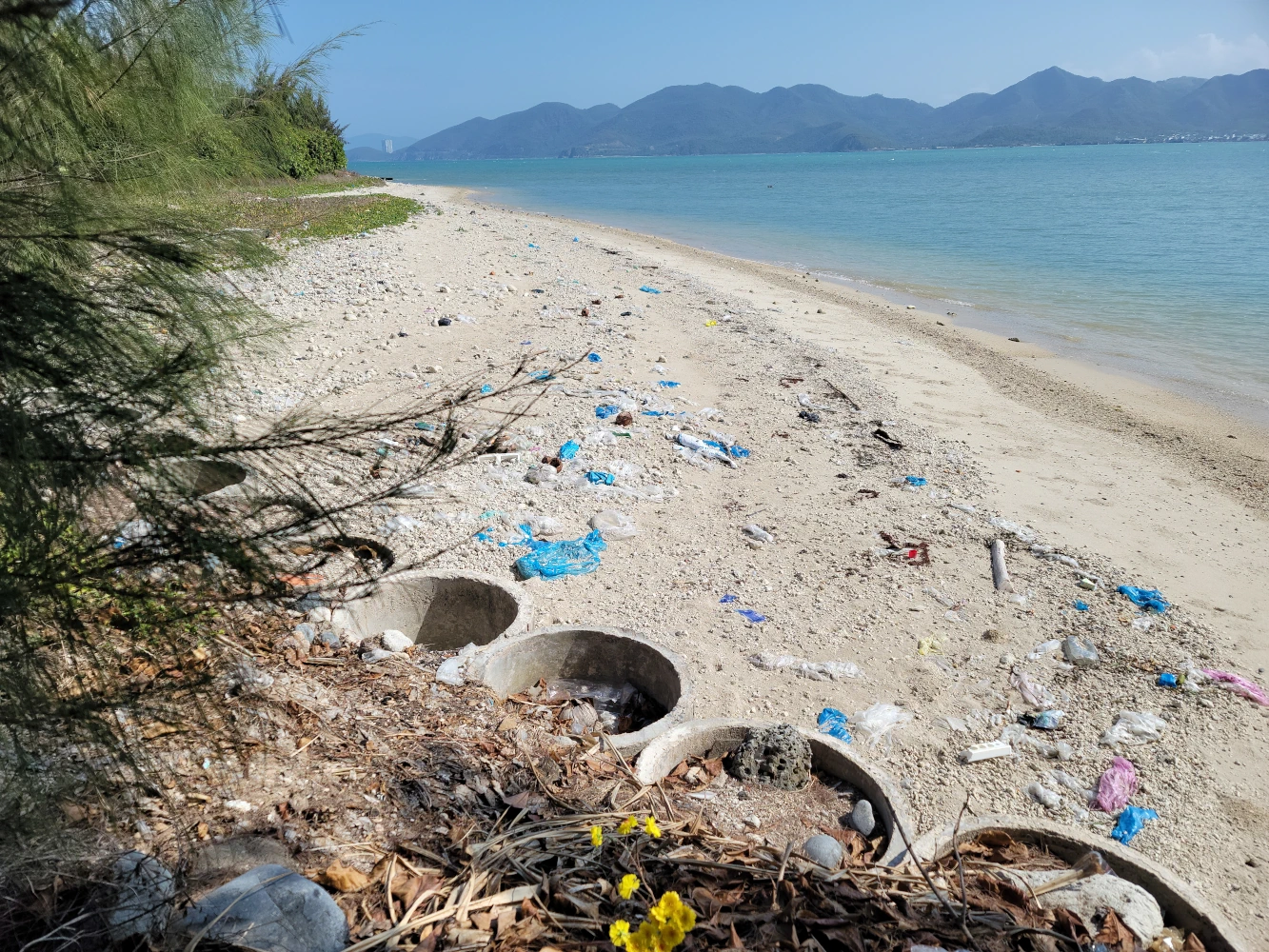
The microplastics health effects are a burgeoning field of study, but the early data is chilling. These particles can act as “Trojan Horses,” absorbing other toxins from the environment—like heavy metals and pesticides—and delivering them directly into our cells. When we discuss plastic chemicals in the food chain, we are talking about a cumulative effect. It is the accumulation, over the course of a lifetime, of thousands of micro-exposures that constitutes a significant toxic burden. Here we see how the mere influx of large numbers of tourists can affect our fragile natural environment: Monkey Island in Nha Trang, Vietnam, has a beautiful, clean beach on one side, but just a few meters away, on the other side of the island, there is a buildup of plastic on the shore.

The Petrochemical Eldorado: Why Plastic Production Isn’t Slowing Down
You might wonder why, with all this evidence, we haven’t simply switched to glass or metal. The answer lies in the shifting economics of oil. As the world moves toward electric vehicles and renewable energy, the fossil fuel industry has turned to plastics (petrochemicals) as their primary growth engine. They are doubling down on production, creating a world where plastic is more ubiquitous than ever. This “miracle material” is now being forced into every corner of the global economy, from fast-fashion textiles to single-use medical devices.
As we continue to produce millions of tons of plastic each year, we are essentially performing a global, uncontrolled experiment on the human species. We are the first generations to grow up entirely surrounded by synthetic polymers, and the long-term data is only now beginning to emerge. Is this a collective suicide? It may sound hyperbolic, but when a species begins to alter its own reproductive and metabolic health through its environment, the word “precipice” starts to feel appropriate.
The 2025 Breakthrough: Aligned Bacterial Cellulose
Fortunately, the same human ingenuity that created synthetic plastics is now finding a way to undo the damage. While earlier bioplastics like those made from corn (PLA) or algae have been helpful, they often lacked the strength or transparency to truly replace traditional petroleum-based materials. That changed in July 2025 with a landmark study from the University of Houston and Rice University.
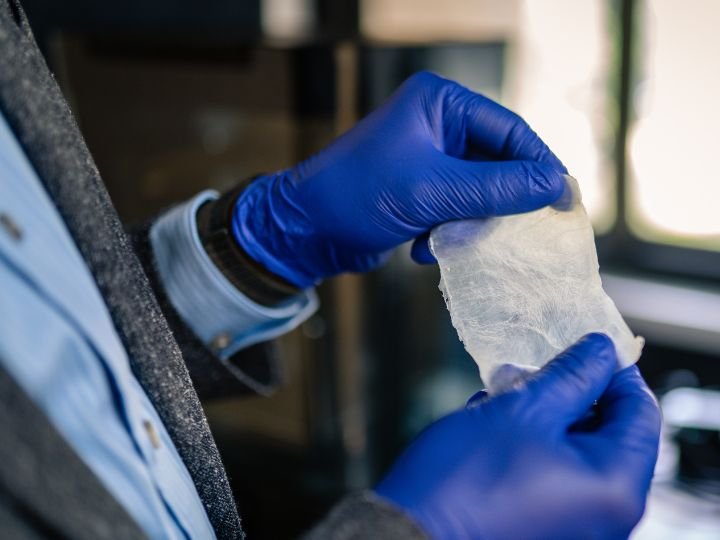
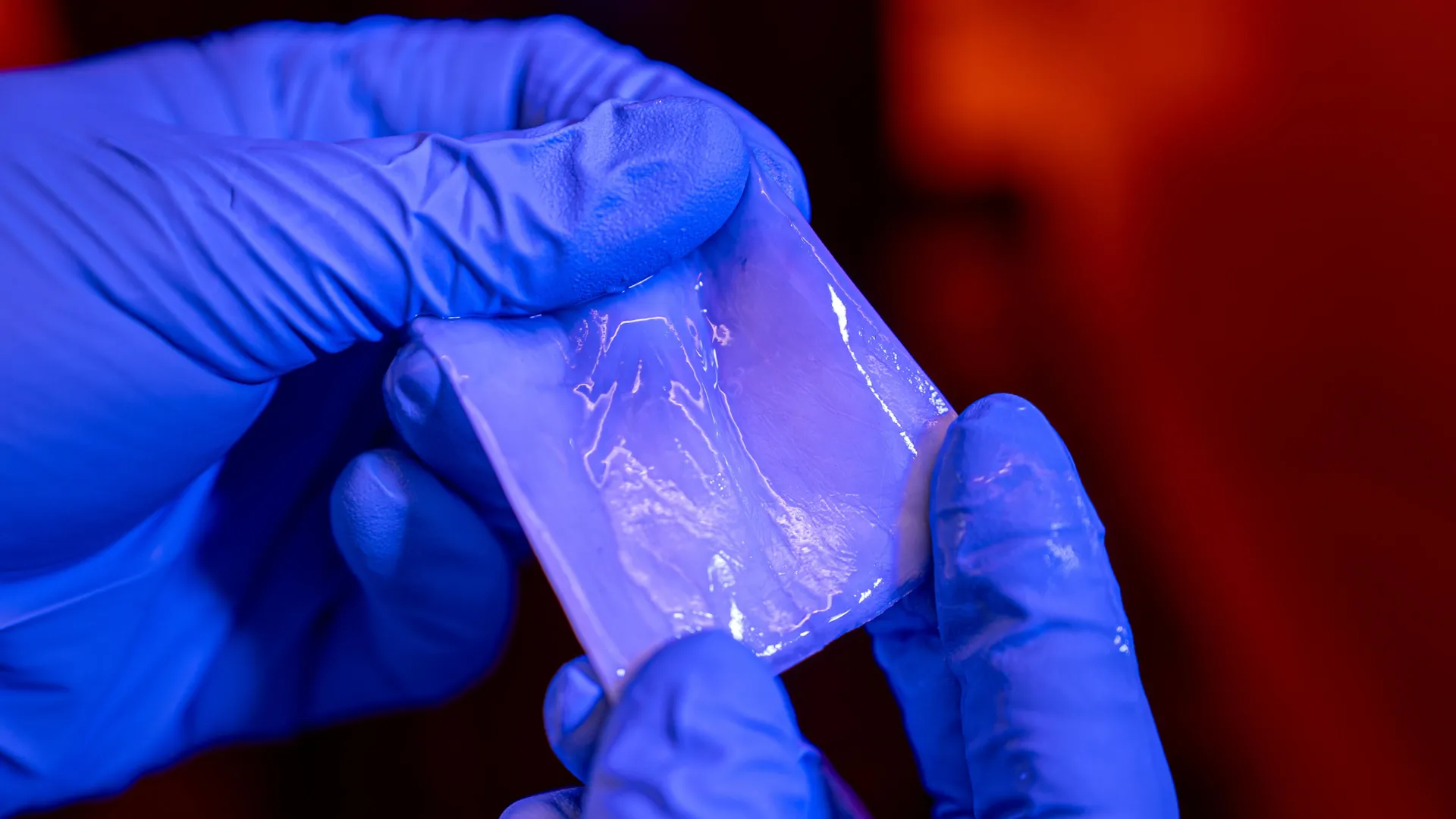
A team led by Muhammad Maksud Rahman developed a revolutionary “supermaterial” known as Aligned Bacterial Cellulose (ABC) Bionanocomposite Sheets. Unlike previous attempts at bio-derived materials, this isn’t just “good for a plant-based sheet”—it’s a material that rivals the mechanical properties of metal and glass while being as compostable as a piece of fallen fruit.
The Secret Sauce: Rotational Bioreactors and Bacteria
The process is as ingenious as it is natural. The researchers used a specific strain of bacteria, Gluconacetobacter, inside a rotational bioreactor. Think of it as a high-tech “spinning” farm for microbes. As the bacteria grow, the rotation guides them to produce cellulose nanofibrils in perfectly aligned patterns. To make the material even stronger, the team can incorporate boron nitride nanosheets, creating a hybrid material that is:
- Extremely Strong: Its tensile strength reaches up to 436–553 MPa, making it comparable to some metals. You could, in theory, build structural components out of it.
- Plastic-like and Transparent: It is flexible, foldable, and clear, which is the “holy grail” for food packaging.
- Thermally Efficient: It dissipates heat three times faster than standard materials, which is vital for electronics.
- 100% Biodegradable: It leaves behind zero microplastics or BPA. When you’re done with it, it breaks down naturally without poluting the soil.
In the words of researcher Rahman: “We envision these strong, multifunctional and eco-friendly bacterial cellulose sheets becoming ubiquitous, replacing plastics in various industries and helping mitigate environmental damage.”
From Bags to Cars: Applications for the New Supermaterial
The versatility of Aligned Bacterial Cellulose is what makes it a genuine contender for the title of “the material that saved the world.” We aren’t just looking at better sandwich bags; we are looking at a fundamental shift in how we build our world.
1. Food Conservation and Packaging
This is where the impact on human health will be felt most immediately. These sheets can be formed into transparent films, pouches, and rigid containers. Imagine buying a bottle of water where the bottle itself is made from bacterial cellulose. It wouldn’t leach endocrine disruptors into the liquid, even if left in a hot car. It provides a protective barrier against oxygen and moisture, keeping food fresh without the chemical cocktail found in traditional plastics.
2. The Automotive Industry
Weight is the enemy of efficiency in vehicles. Because these bionanocomposites are lightweight yet incredibly tough, they can be used for structural panels and interior components. Replacing heavy plastic or metal parts with cellulose-based composites helps reduce carbon emissions during the vehicle’s life and ensures that the car doesn’t end up in a landfill as a pile of non-degradable waste decades later.
3. “Green” Electronics
Modern devices generate a lot of heat. The 3x faster heat dissipation of aligned cellulose makes it an ideal substrate for flexible electronics, battery layers, and thermal management shields. This allows for thinner, faster, and more eco-friendly smartphones and laptops that don’t rely on toxic permanent resins.
4. Textiles and Wound Dressings
Because the material is biocompatible, it has immense potential in the medical field. It doesn’t trigger immune responses, making it perfect for advanced wound dressings that help skin heal while being naturally absorbed or composted. In fashion, it offers a path away from synthetic “fast fashion” fibers that shed microplastics every time they are washed.
How to Avoid Microplastics in Food: Practical Steps for Today
While we wait for bacterial cellulose to become ubiquitous, we must take immediate action to protect our families. Knowledge is our best defense against plastic chemicals in the food chain. Here are clear, unhurried steps you can take to reduce your exposure:
- Avoid Heating Plastic: Never put plastic containers in the microwave or dishwasher. Heat is the primary catalyst for chemical leaching. Switch to glass or ceramic for all heating tasks.
- Filter Your Water: High-quality carbon or reverse osmosis filters can significantly reduce the concentration of microplastics in your drinking water.
- Ditch the “Paper” Coffee Cup: Most “paper” cups are actually lined with a thin layer of plastic (polyethylene). When hot coffee hits that liner, it releases trillions of microplastic particles. Carry a stainless steel or glass travel mug.
- Choose Fresh Over Canned: Many food cans are lined with epoxy resins containing BPA or its cousins (BPS/BPF). Fresh or frozen produce in non-plastic packaging is always a safer bet.
- Be Wary of “BPA-Free”: Often, manufacturers simply replace BPA with another similar chemical that hasn’t been studied as much. Stick to inert materials like glass, stainless steel, and cast iron.
The Path Forward: A Call for Bio-Material Sovereignty
The discovery of Aligned Bacterial Cellulose is more than just a scientific curiosity; it is a beacon of hope. It proves that we do not have to sacrifice the comforts of modern life—the convenience of lightweight packaging or the efficiency of high-tech devices—to maintain our health. We can have strength without toxicity and transparency without plastic pollution.
However, the transition won’t happen by accident. It requires us, as consumers, to demand better. We must support the researchers and companies moving away from the petrochemical status quo. We have seen how quickly the world can change when a better alternative presents itself. By moving toward materials that are “of the earth” rather than “of the oil well,” we are choosing a future where our food is pure, our bodies are respected, and our planet can finally breathe again.
Frequently Asked Questions
Are microplastics really that dangerous?
While we are still learning the full extent of microplastics health effects, current research shows they can cause cellular damage, inflammation, and act as carriers for other environmental toxins. The precautionary principle suggests we should minimize exposure while more data is gathered.
Is bacterial cellulose expensive to produce?
The breakthrough in 2025 by the University of Houston was specifically focused on scalability. By using a single-step biosynthesis method in a rotational bioreactor, the process is significantly more cost-effective and faster than previous lab-scale attempts, making it a viable competitor to tradition plastics.
Will these new materials actually biodegrade in my garden?
Yes. Unlike “biodegradable” plastics that require industrial composting facilities and high heat, Aligned Bacterial Cellulose is compostable like paper. It returns to the earth as natural organic matter, leaving no synthetic residues behind.
Why are endocrine disruptors so harmful?
The endocrine system regulates almost every function in the body. Endocrine disruptors in food can scramble the signals for growth, reproduction, and metabolism, leading to a host of modern health issues that were much rarer before the plastic age.
The time to act is now. We have the data, we have the warnings, and we finally have the “supermaterial” solution. Let us stop sleepwalking and start building a world where the only thing we find in our food is nourishment. Join the movement for a plastic-free future by supporting bio-innovations and making small, meaningful changes in your home today. Our health, and the health of generations to come, depends on it.