Embracing the Future: A Leisure Society in the Age of AI and Robots
11 min read
The Dawn of a Leisure Society
As we move deeper into the 21st century, the advent of artificial intelligence (AI) and robotics is set to usher in profound changes to society and the way we live and work. The concept of a leisure society—one characterized by reduced work hours and increased leisure time—emerges as a prominent prediction of this transformation. Automation, enabled by advanced technologies, is envisioned to take over routine tasks, allowing individuals to pursue more fulfilling activities beyond traditional employment.
Throughout history, every time technology has enabled a 10x or greater cost reduction relative to the incumbent system, a disruption has always followed. While taxi drivers and even teachers claim they are irreplaceable, it is inevitable that technology will take over. Actually, you can already access thousands of pre-built online courses or you can create custom courses with Create AI in minutes with Absorb Amplify website.
In the next 10 to 20 years, significant advancements in AI and robotics are anticipated. Industries such as manufacturing, transportation, and even services are on the cusp of rapid automation, leading to enhanced productivity and operational efficiency. With robots and AI systems increasingly capable of performing tasks that were once exclusive to human workers, the traditional 40-hour workweek may become increasingly obsolete. Instead, individuals may find themselves enjoying substantial amounts of free time previously devoted to work.
The shift towards a leisure society will not only impact the workforce but also influence cultural and social dynamics. With more time on their hands, people are likely to engage in lifelong learning, creative pursuits, and community activities, fostering a richer quality of life. Conversely, this transition calls for a re-evaluation of economic structures—such as universal basic income or alternative employment frameworks—to support those displaced by automation.
Overall, the growth of AI and robotics propels us toward a new era where leisure could become a central tenet of our lives. By understanding these impending changes, we can better navigate the challenges and opportunities that a leisure society presents, ultimately enriching our collective experience as we embrace this new age.
The Economics of Automation: Cost-Effectiveness of AI and Robots
As we navigate the complexities of a technologically advanced society, the economics of automation has become a focal point of discussion, particularly regarding the deployment of robot’s in lieu of human labor.
For the purposes of illustration, the lifetime costs of humanoid robots are likely to be far less than $200,000 right from the start and will be on a trajectory to under $1/hour before 2035 and under $0.10/hour before 2045 according to expert of RethinkX website.
Humanoid robots fundamentally change the equation. Instead of growing only as fast as a human population, available labor can now grow as fast as humanoid robots can be built and deployed. The difference will be explosive, and humanoid robots will trigger a wave of productivity that could develop without significant constraints in almost any region or country. This will enable any country to significantly increase its workforce and, as a result, develop its economy in terms of per capita productivity to a level that was simply impossible until now. Just think that to integrate one million people into the country’s workforce, it might take $100 billion and 20 years, whereas to add one million humanoid robots to that workforce, it might only take $10 billion and just one year. Humanoid robotics will massively increase prosperity, and thereby make every major social, economic, geopolitical, and environmental problem more solvable.
Additionally, the adaptability of robots across different industries—ranging from manufacturing to healthcare—highlights their potential to disrupt existing economic models. Manufacturing entities, for example, may experience enhanced efficiency and reduced production times as robots take over repetitive tasks. This shift not only raises the bar for productivity but also flattens the cost structures, leading to more competitive pricing in the market.
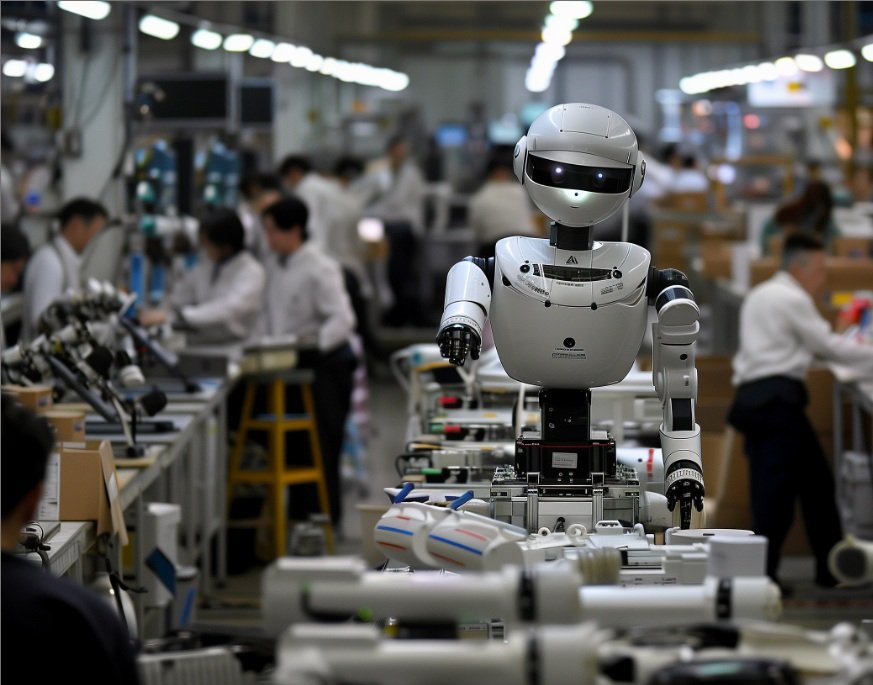
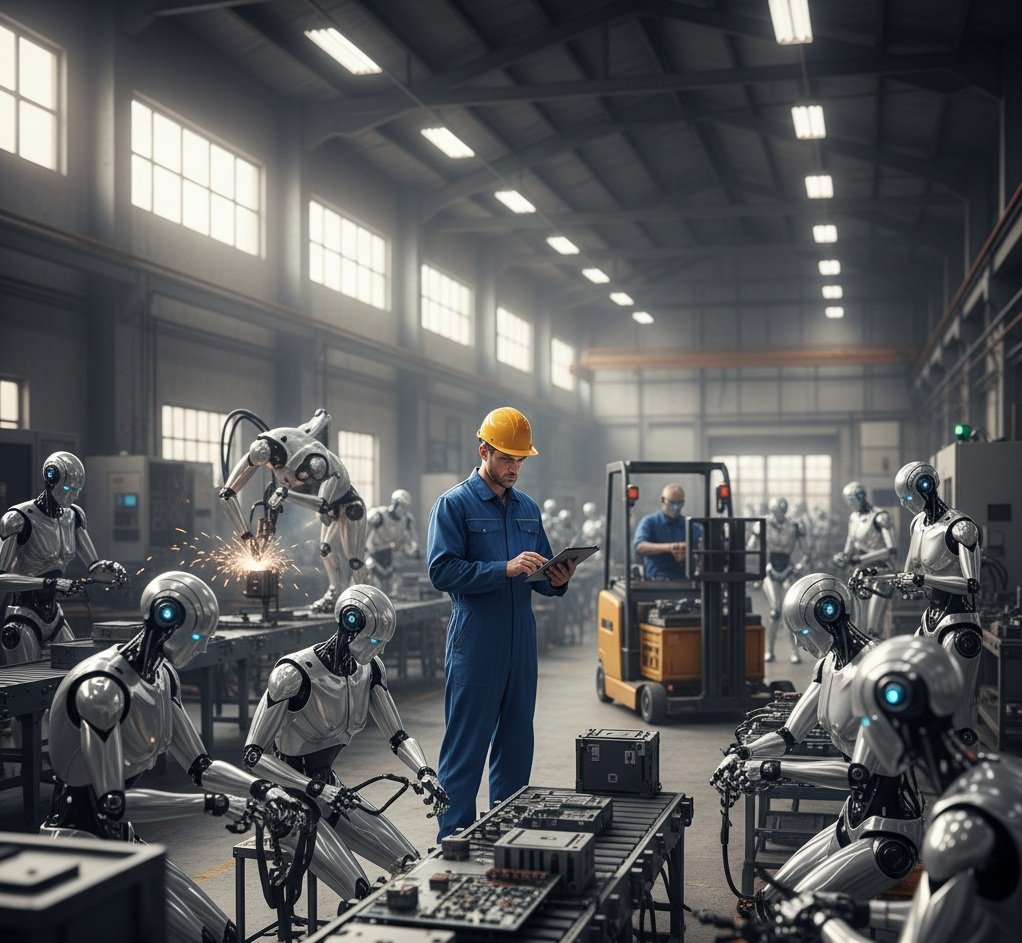
According to Musk, there’s actually only one way to do that, and that’s with the Optimus robot. Optimus will actually eliminate poverty. The robots would increase the global economy by a factor of 10, Musk said, or possibly even 100. Musk imagined a world of “sustainable abundance”, with Optimus leading the way. An Optimus robot will have 5x the productivity of a human per year, because it would be able to operate 24/7.
He came to the conclusion that the only way to get us out of the debt crisis and prevent the United States from going bankrupt is artificial intelligence and robotics. Tesla is currently in the design stage for Optimus, which Musk has said has proven challenging — especially when it comes to the robot’s hands. Musk said that he eventually expects to be able to sell Optimus for $20,000 to $30,000 once the robots hit volume production.
The Future is Here: Tesla’s Optimus and Advancements in Robotics
The continuous advancement in robotics has garnered significant attention, particularly with Tesla’s unveiling of the Optimus robot. This innovation showcases a pivotal movement towards integrating humanoid robots into various sectors, which could reshape the landscape of labor and productivity. Humanoid robots like Optimus are designed to perform tasks traditionally undertaken by humans, ultimately streamlining processes and enhancing efficiency.
As previously demonstrated, the productivity of humanoid robots will exceed that of human labor over time. These robots are designed to operate in various environments, tirelessly and consistently, making them very attractive compared to human workers, especially in sectors where monotonous or strenuous tasks are common. Focused on cost-effectiveness, the use of robotic technology can reduce operating expenses, as robots do not require salaries or benefits, further incentivizing companies to adopt these innovations. For example, with an average annual salary of over $50,000 for a human worker, long-term savings on wages, benefits, and other labor-related expenses can make the transition to automation financially very advantageous.
Elon Musk articulates a vision for a future led by advanced robotics, where the potential of robots like Optimus is fully realized. By reducing the reliance on human labor for mundane tasks, society can shift towards a leisure-focused lifestyle, emphasizing creativity, innovation, and personal fulfillment. This transformative shift, however, brings challenges that must be addressed, such as workforce displacement and the ethical considerations surrounding widespread automation.
As we witness these technological advancements, it becomes increasingly important to engage in discussions about the implications of a leisure society driven by AI and robots. Societal adaptation and redefinition of work will play critical roles in this transition. The integration of Tesla’s Optimus and other robotic technologies symbolizes a significant step towards a new era that promises increased productivity and a reimagined approach to work-life balance.
Economic Challenges in a Work-Optional Society
Economic CThe transition towards a work-optional society, largely driven by advancements in artificial intelligence (AI) and automation, presents not only opportunities but significant economic challenges. As robots and AI systems increasingly take over tasks traditionally performed by humans, there is an urgent need to address the disparity in wealth distribution that could arise as a result. With fewer individuals engaged in the conventional workforce, a potential crisis of income inequality looms as the concentration of wealth shifts towards technology owners and innovators.hallenges in a Work-Optional Society
Taxation:
To mitigate this growing economic divide, a comprehensive restructuring of taxation systems may be necessary. A taxation framework that considers the automated surplus generated by AI technologies is essential for ensuring that the benefits of automation are equitably shared across society. Concepts such as a robot tax—where firms employing automation contribute to social welfare funding—could provide viable revenue streams for governments, thereby facilitating wealth redistribution and supporting those who find themselves displaced by technological advancements. Actually, no country has a system to effectively measure and tax the surplus generated solely by automation.
Political Will:
Moreover, transitioning to this new economic paradigm will require significant political will and societal consensus. Policymakers must prioritize the establishment of a sustainable framework that supports a work-optional society and fosters human purpose beyond employment. This could involve promoting educational initiatives that empower individuals to engage with new technologies, while also encouraging the exploration of alternative identity sources, such as volunteer work or creative pursuits. By emphasizing the importance of human value independent of traditional employment, society can strive to maintain a collective sense of identity during this transformative period.
Ultimately, embracing the future implies a recognition of the imperative for systemic change. Addressing wealth distribution and economic challenges in a post-work society involves not only innovative taxation strategies but also a commitment to rethinking societal roles and values in an age increasingly defined by AI and automation.
Emotional and Psychological Impacts: Adjusting to a New Reality
The transition towards a society increasingly dominated by artificial intelligence and robotics poses significant emotional and psychological challenges for individuals. As traditional employment roles diminish, many may confront feelings of uselessness, experiencing a profound sense of loss tied to their identity and societal contribution. The end of conventional jobs can lead to a crisis of self-worth; individuals who derive their identity from their careers may find themselves grappling with existential questions about their place in an evolving world.
In the face of this potential upheaval, the emotional repercussions could range from feelings of depression to anxiety, as individuals transition from a familiar structure to an uncertain future. The psychological stress linked to unemployment, whether actual or anticipated, often exacerbates existing mental health issues, requiring society to be proactive in addressing these concerns. Access to mental health resources and community support will be crucial in helping individuals navigate their feelings during this adjustment period.
However, it is essential to recognize that this transformation may also present opportunities for personal growth and exploration. As the traditional job market evolves, individuals might rediscover or redefine their passions and talents. In a society increasingly liberated from the constraints of labor, creative outlets such as art, writing, or entrepreneurship can become essential avenues for fulfillment. By engaging in these pursuits, individuals can foster a sense of purpose and connection, promoting mental well-being even as the landscape of work changes dramatically.
Thus, while the emotional impacts of transitioning to a leisure society are multifaceted and deeply felt, they also pave the way for potential reawakening and self-discovery. Embracing this new reality will involve acknowledging the challenges while also exploring the avenues for creativity and human expression that arise in such an environment.
Musk’s Vision: The Era of ‘Universal High Income’ or wealth would be meaningless
We must keep in mind that several disruptive technologies will also emerge simultaneously over the next 10 to 20 years, such as the convergence of autonomous driving technology and electric vehicles, known as “Transportation as a Service“ which will reduce or completely eliminate transportation costs for everyone. The ”Product as a Service” (PaaS) model, which will shift from individual ownership of vehicles or electric vehicle batteries to shared access, aligns with the circular economy principle of maximizing product use. All those technologies together will accordingly highlight a possible future of sustainable abundance, providing enough money to all governments to share a ‘Universal High Income’ for everyone and by extension resolve the homeless people that emerge in our society. There will no longer be any valid reason to print new greenbacks, which will forever prevent our governments from artificially creating inflation.
Elon Musk’s vision of a future defined by ‘Universal High Income’ represents a significant departure from traditional economic models, where employment is often seen as the primary means of obtaining resources for sustenance. Musk proposes that advancements in artificial intelligence (AI) and robotics could enable a societal paradigm shift where basic needs are met without the necessity for conventional jobs. In this innovative framework, technology takes center stage, effectively managing production and distribution processes that are crucial for human welfare.
This model aims to tackle poverty by ensuring that all individuals have guaranteed access to essential goods and services, such as food, housing, and healthcare. By leveraging AI and automation, businesses can produce goods more efficiently, driving costs down and enhancing availability. Musk envisions a future where technology not only alleviates scarcity but cultivates a state of sustainable abundance. This concept aligns with the growing discourse surrounding universal basic income (UBI), which advocates for a system that provides even the most marginalized populations with financial support—allowing them to pursue education, creativity, or caregiving without the constraints of low-wage work.
In conjunction with promoting economic equality, Musk’s vision seeks to catalyze a transformative economic landscape, fostering innovation and creativity. With basic human needs met, individuals are posited to engage more deeply with their passions and potential, thereby enhancing societal progress. Critics may express concerns about dependency on technology and the implications for work culture, yet proponents argue that this shift is necessary in a world increasingly influenced by automation.
Overall, the implementation of a ‘Universal High Income’ as envisaged by Musk represents a forward-thinking response to the challenges posed by technological advances. It invites us to reconsider our existing frameworks for work, value, and community in the age of AI and robotics,
Musk’s thinking goes much further “In a future where everyone can have everything, money will no longer be necessary as a basis for the distribution of work.” And “believes this reality could be less than 20 years away, positioning work as more of a hobby than a necessity.” and, “argues that accumulating wealth would be meaningless in an economy of abundance.” So, the future is faster than we think.